Day One saw the arrival of the Virgin Galactic spaceship carrier, White Knight Two (aka “Eve”). To refresh your memory, this is the carrier, the mothership craft which will take the spaceship a few miles aloft. At this point, the spaceship will be released, and then it will use rockets to take passengers to the edge of space.
On Monday, however, we had rain. Heavy rain. So, White Knight 2 landed fast and scurried into a hangar immediately.
Consequently, it wasn’t until Tuesday that we really had a chance to see the craft. She started by making a few slow flybys…nice and quiet (almost like a glider)…and then ducked back into the hangar for a couple of hours.
The reason Eve went back to the hangar became clear a few minutes later. I was en route to an exhibit when a dark shape blotted out the sky. Something truly massive, vaguely sinister, a vast orca with wings. Then, a cloud shifted and I realized it was the Airbus A380, the largest passenger plane in the world. This plane is so large, they had to rearrange lighting, strengthen portions of the runway, and clear the center display area to hold it.
The Concorde came to Oshkosh several times. The SuperGuppy, a specially modified plane which carries components for the space program (we’re talking HUGE). The B-2 bomber. The C-5A Galaxy. But the A380 dwarfs them all.
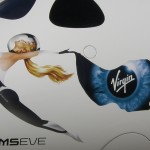
After the A380 was ensconced in the main display area (fun to watch), Eve returned, and I was able to take a few pictures up close, including the terrific graphics and most attractive noseart (see below). I also have a t-shirt with the same graphics. I’m such a geek!
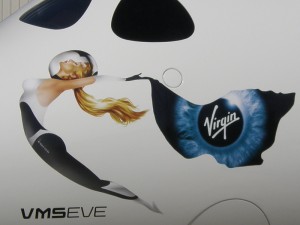
Eve Nose Art
In case you’re wondering, the classy woman is Sir Richard Branson’s mother, Evette. The image is both an homage to her and the pinup-inspired artwork made famous on WWII aircraft. Branson is clearly an aviation fan…he once apologized to me when he accidently walked into a photo I was taking of the first White Knight back in 2005.
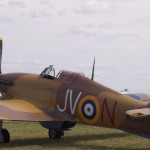
Along with ogling nose art and whale watching, I saw a few other aircraft including a Hawker Hurricane IV (Hurricanes and Spitfires stopped the Germans during the Battle of Britain nearly 70 years ago…seems like yesterday). This was a beautifully-restored example down here from Canada, complete with the rear-view mirror for the pilot, handy for merging into traffic, and with grease fittings on the aileron hinges.
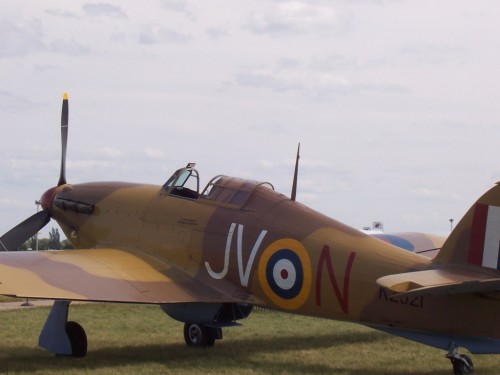
Hawker Hurricane IV
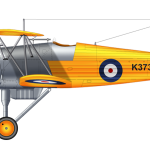
Unlike the Spitfire, which was a new design with some influences from Supermarine’s racing floatplanes, the Hawker plane owed much to it’s biplane ancestors. The design was essentially a re-engined, monoplane version of the Hawker Fury and Hawker Hart biplanes.
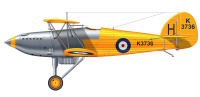
Hawker Fury Biplane
Unlike the all-metal construction of the Spitfire, the Hurricane used construction techniques already considered obsolete by the start of the war, with fabric-covered wings and fuselage (later models had metal-skinned wings), and minimal use of welding. Ironically, these same features contributed to the Hurricane’s longevity, because crews found the planes easily repaired and maintained. The type served throughout the war, and with various air forces for many years afterwards.
In the evening, we went down to the Ultralight area (a couple of miles down the line…the entire flight line is some 5 miles long, with double rows of airplanes every 80 feet). It was pretty breezy, but some of the planes were aloft, including the Snedden M7. The Snedden M7 uses a single stick to control ailerons and the inverted V-tail (which itself combines the rudder and elevators). Interesting airplane, although getting into the cockpit requires crawling underneath and then popping up into the seat. Hmm…
We also saw the the Yuneec electric-powered ultralight. I’ll be interviewing them on Friday.
-
- Crowds in the vendors section
-
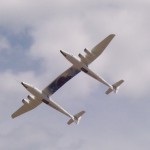
- White Knight against the clouds
-
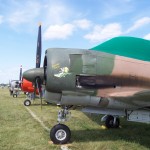
- Nose art
-
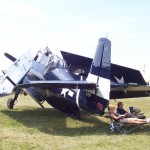
- An Avenger folds its wings for a nap…and its people join in
-
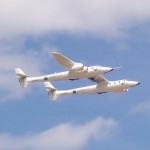
- Bliateral Symmetry in Flight
-
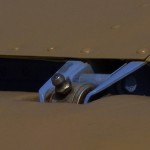
- Hurricane Aileron Hinge with Zerk Fitting
-
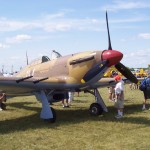
- Hawker Hurricane IV
-
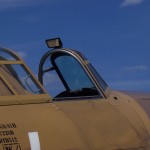
- Hurricane Windscreen with Rearview Mirror
-
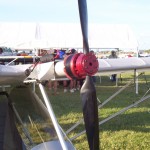
- Yuneec Electric Motor Installation
-
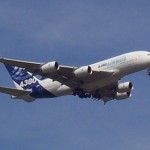
- The “Flying Whale” Airbus A380 Arrives
-
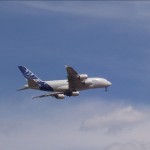
- Airbus A380
-
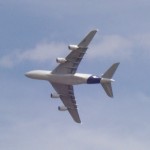
- The A380 Rolls Over for a Belly Rub
-
- Bleriot XI Replica Build in 21 Days
-
- The Newly-Relocated Flymart!
-
- The Aeromart (Airplane Parts)
-
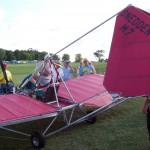
- Snedden M7 Ultralight
-
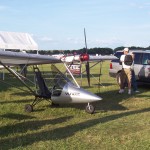
- Yuneec Electric-Powered Ultralight
-
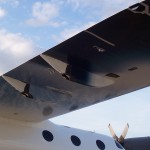
- Eve (aka White Knight 2) Center Section
-
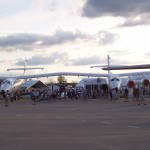
- Eve (White Knight Two)
-
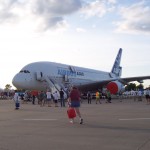
- Tiny Airbus A380 on the ground.
-
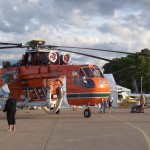
- Modified Firefighting Sikorsky Skycrane, “Elvis”
-
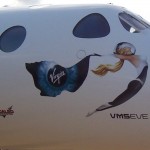
- Eve Noseart on the Virgin Galactica Spacecraft
-
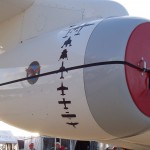
- History of Aerospace Graphics on Eve / White Knight 2
-

- Virgin Galactic Logo
-
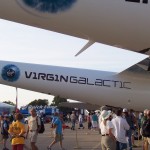
- Where Can I Buy a Ticket?
-
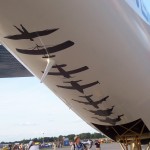
- History Graphics appear on the Tail booms as well…
-
- Eve Nose Art
-
- Hawker Hurricane IV
-
- Hawker Fury Biplane
Oh, after all of the rain on Monday, we had dust everywhere today.