Archive for the ‘Oshkosh’ Category

Day 7: Final Interviews…we’re almost done!

Monday, August 3rd, 2009

I’m drinking tea this morning, and thinking about my last interview of the show. Yep, I promised Harold Kurtz I would have a proper mug of tea for him…my best wishes to you, sir!

I did three interviews yesterday morning: Lutz Pritschow (an air traffic controller in Frankfort), a second part with Mike Leone, and an interview with WWII veteran and missionary pilot, Harold Kurtz.

I’ll explain about the tea in the next post…it’s a story worth telling, I promise, along with posting my last pictures and videos. Over all, I interviewed over a dozen people, Tracy talked to about four or so, Zack about five or six (since he’s pulled in about 800 different directions during the show, that’s pretty good…some years, he barely manages one or two).

During this week, I met up with old friends and met lots of new people. I also managed to walk a few miles, rush off to technical forums, watch ultralight aircraft go flying at sunset with Tracy, walk through rows of airplanes in the middle of a downpour with a big wet grin on my face, and sunburn my tonsils watching Patty Wagstaff make her airplane do impossible acts in the air…along with about 40 or 50 other performers. I saw the past, the present, and the future of air and space travel, and I spent some 20 hours talking to the people who make it all happen…one-on-one.

This was a big week. Many of us, myself included, expected attendance to be down between the economy and fuel prices. Instead, we had record crowds early on…camping and airplane parking filled up earlier than every before. There was something here for everyone, from hardcore technical forums for geeks like me to a soggy performance by the Doobie Brothers and a capacity crowd to hear Captain Sully explain just how you set an airliner down on the Potomac!

Zack, Tracy, the fabulous Mel Smith, and a couple of other people were honored for our work with the Timeless Voices program on Wednesday morning. Stood on a stage, had pictures, plaques, the whole nine yards. Adam Smith also announced that young Zachary will be going up for a flight in an AT-6, the advanced trainer used prepare pilots for their transition to fighter aircraft in WWII…he’s very happy about this!

At any rate, this morning I need to catch up on some client communications. I’m happy to be back at work, feeling quite charged up after this experience. Ah, what a terrific week!

Day Three: A Cox and Buls Story

Friday, July 31st, 2009

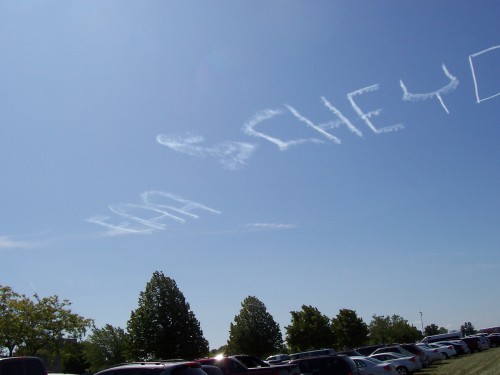
103_0871

En route to this morning’s interview, I spotted a skywriter carefully working the skies over Oshkosh. First, they wrote “EAA” (Experimental Aviation Association, the group holding this event). Then, “S…C…H…E..Y…D…” Whaaa? Then, they followed this up with some distinctively phallic design. I would have a picture of this, but my batteries died right then. So many jokes I could make right there…

At any rate, today I interviewed Jessica Cox and Milton Buls (pronounced “Bulls”). I intended to take photos of all my victims…er, interview subjects…this year, but I haven’t been diligent in getting photos of everyone. I did manage to get photos of Colonel Milton Buls, however.
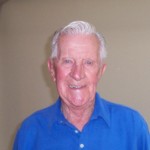
103_0872
Colonel Buls was one of those terrific interviews where you sit down with someone who did incredible things…and yet escaped notice by historians. I found myself on a wild ride, a fabulous story never heard by anyone except for the participants before the interview. His son and grandson both sat in on the interview. His son retired from the Air Force and Fedex, and his grandson just passed pilot training with the Air Force, so I had three generations of Air Force in one room!
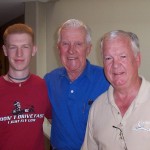
103_0874Colonel Buls fascination with flight began as a small child. He grew up in the middle of a large flat cornfield known as Kansas. One day, an aeroplane appeared in the sky…this was a big deal then. Heck, just a few years ago, there were only two cars in Kansas, and they had crashed into each other.

This was the first time Buls had seen a plane. It circled the farmhouse lazily, and then settled down in the back field.*
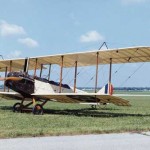
Oct-07-02It was a Curtiss JN-4D Jenny, fresh out of the crate, still in olive drab military colors. At the stick was his uncle, a WWI airplane pilot. He had purchased the plane new from some depot (along with a fellow named Charlie Lindbergh) and was planning to join a flying circus and barnstorm around the country. He stayed over for a couple of days, and Buls remembered flying in the plane. He was supposed to sit on his father’s lap, but stood the entire time, his little hands gripping onto the top wing, a big grin on his face.
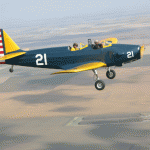
05_pt-19A number of years later, still enamored with airplanes, Buls joined an Army program. He didn’t expect to ever fly. Too expensive. Something for college graduates, people with money and connections. Instead, he was going to be a ground pounder. But when Pearl Harbor happened, everything changed. Suddenly, the thought of having an enlisted man become a pilot was no longer forbidden. Buls wrangled a switch to the Air Corps (this was before we had a separate Air Force), and just two months later, he was learning to fly in PT-19s.

It was a measure of the urgency of the war that Buls soloed in a mere 8 hours. His training moved fast, but it was subject to the whims of the military. Essentially, the military works like this: they need someone to do a job, you request to do that job, and some bored sergeant in HQ transfers you wherever he damned well pleases. In Buls case, within sight of becoming a fighter pilot, he found himself in Air Transport Command.

He was crushed. He wanted to be a hotshot fighter pilot, or even a bomber pilot. Let’s face it, they got the gals…and almost as important to Buls, they often had great golf courses at their bases. Well, a man’s got to have a hobby, right?
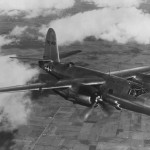
B-26_02But Buls soon found ferrying bombers and cargo aircraft had its own set of challenges. His favorite plane was the Martin B-26 Marauder. This plane was a medium bomber with very advanced aerodynamics. The resulting plane was an extremely fast, efficient aircraft with a shoulder-mounted laminar-flow wing, all flush riveted, slim and sleek as a twin-engined shark.

Faster planes mean the pilots have to think a little faster themselves. In the middle of the war, with pilots being stamped from civilians at record rates, getting up to speed could be a problem. The faster landing speed, and unusual handling characteristics when an engine went out, caused quite a few accidents when the B-26 first came into service. The plane was dubbed “The Widowmaker”; ironically, the B-26 ended the war with the lowest accidental loss rate of any of the bombers…it just took time for people to get up to speed.

Buls got up to speed faster than anyone else, however. He trained at the Martin plant and soon learned to do things with the B-26 others considered impossible. He found himself training pilots everywhere on the idiosyncrasies of the aircraft…and probably saved countless lives in the process.

For this, he was rewarded with a transfer to India flying the hump with B-24 Liberators, C-46 Commandos, and B-25s converted to cargo craft (that bored sergeant in HQ struck again). Buls’ primary mission was shuttling aviation gasoline to remote airstrips in China. Think of it, flying aircraft with two-three thousand gallons of gasoline night and day in rotten weather without radios, lousy navigation, and all of this over some of the highest mountains and most rugged terrain in the world.

Buls soon discovered the electrical motor responsible for the landing gear hydraulic operations had a fatal flaw: it threw sparks when it ran. With an aircraft full of tanks bolted together, gas was bound to leak…so the crews were ordered to avoid using their landing gear if there was any hint of gasoline fumes in the cargo hold.

Shortly thereafter, the dangers of this were reinforced. Taking off for a night mission, Buls was following his best friend off the runway. His wheels had just left the ground, his friend’s plane was just starting to climb up…when it exploded into a massive fireball which lit the sky like a midnight sun. Buls had no choice but to fly right through the explosion and carry on his mission.

Buls had a close encounter a few weeks later. Coming in for a landing, his navigator checked the hold for fumes. He came rushing back. The gasoline was leaking badly, and there was 6 inches of gasoline sloshing around in the hold.

On the B-24, this wouldn’t have been a problem. The B-24 was originally designed as a bomber with humongous bomb bay doors. If this had happened there, he would have simply opened the doors and let the fuel out. But this night, Buls was flying a B-25 converted to carry cargo. Some unknown idiot had decided to weld the bay doors shut. As a result, they now had gasoline-filled swimming pool in their plane…and no means of dumping it.
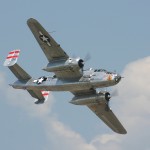
B-25 (Armed Version, but you get the idea...)

B-25 (Armed Version, but you get the idea...)

Buls circled the plane for a moment thinking. The jungle looked uninviting, full of mosquitoes and snipers (hard to tell which was worse). Then, inspiration struck. He issued crash axes, intended to help survivors escape from crashed airplanes, and told the crew to punch holes in the bottom fuselage (but, for god’s sake, don’t make any sparks!). They flew around until everything drained and he could finally land safely.

After the war, Buls found himself in unusual circumstances once again. Hoping to be transferred to a B-47 wing, he found himself in the newly formed ballistic missile command (bored sergeant strikes again). Buls picked the locations for bases, wrote the procedures for firing the missiles…that whole “two guys insert their keys and turn them” procedure? His. Oh, and this is the guy who decided to create Cheyenne Mountain. Yep, thanks to Buls, the military had a place to investigate the Stargate!

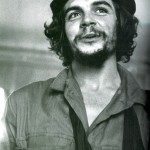
Another mix-up put Buls in charge of operations in Bolivia a few years after that…just after Che Guevara decided to make it his headquarters for converting the entire continent to Communism. Wow, remember that? What a blast from the past.
che_guevara
Buls was approached by the new President of Bolivia (#53 in a mere fifty-four years!) for a little help. They affixed guns to some AT-6s, a couple of Mustangs, and a venerable old C-47, and went hunting for Che’s jungle hideout.

Within days, it was all over. One of Buls’ AT-6s wounded Che, and he was brought in to face the firing squad. Realize, all of this time, Buls is still in Air Transport!

Eventually, Buls retired. He soon found himself working with a start-up that was to become Fedex. He flew with Fedex for 10 years, watching the company move from one plane to dozens. This was aided by an old friend he used to deliver Kentucky bourbon to, a certain Barry Goldwater. Eventually, he retired again, and starting building and flying airplanes for fun. Whew!

I spend two hours with Buls, and we could’ve spent days. It was most gratifying to hear his family say they had never heard most of these stories before.

jessica-cox-pilotAt the end of the day, Tracy and I interviewed another person, Jessica Cox, a young woman who had just flown into Oshkosh for the first time. While this is impressive in itself, it’s even more impressive when you know she did this only using her feet since she was born without arms.

The interview was rather short since she had another appointment, but quite fun anyhow. We talked about her choice of aircraft, the Ercoupe. As WWII was coming to a close, people expected there to be a boom in postwar aircraft sales. Ads talked about a helicopter in every garage, and magazines like Popular Mechanics wrote about the many designers working to create simple, “fool-proof” aircraft anyone could fly.

The Ercoupe was one of the most popular entries in this market (indeed, it’s had a couple of reincarnations). A single-engined low-wing monoplane with twin tails and a side-by-side seating under a bubble canopy, the plane was sleek and modern.
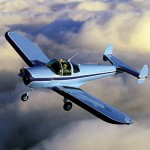
ercoupe_415c-1The prospective pilot who sat in the plane soon realized an important difference separated the Ercoupe from other aircraft: no rudder pedals. Your feet did nothing. There wasn’t even a stick. It was a steering wheel, just like a car. This design included special features which tied the operations of the rudder and ailerons together. Additionally, the stabilizer had a limited range of movement. Combined together, the plane was not only simple to fly, but spin-resistant.

With Jessica, the Ercoupe was perfect. Her feet function as her hands. Operating the Ercoupe would be just like driving her car, and there would be no need for any costly modifications. She did all of her training in her beloved Ercoupe, including soloing, that first hard-landing, cross-country flights, and finally, traveling to Oshkosh with a “gaggle of Ercoupes”.

I asked Jessica if she was going to pursue more advanced training (e.g., an instrument rating), and she replied in the affirmative. She wants to become a flight instructor, and is even working with a young man who is, like her, also reliant upon his feet.

All-in-all, two terrific people to interview!

*I remember, as an airplane-mad kid, I was convinced that if a plane landed on our farm, it was ours! While we had lots of low-flying airplanes, we never had any landings (I came close to getting a National Guard helicopter once that came down to within 10′ of the ground!).
Day 3: Plaques That Don’t Involve the Dentist

Thursday, July 30th, 2009

Well, short post now…I’ll flesh this out with a follow up later. But the morning started out with a rush to the museum. There was a celebration honoring people working with the Timeless Voices oral history project. We got plaques and had to stand on stage while people took pictures and said embarrassing things. Nice, but I realized that I’ve been working at home alone for too long…the attention was a bit overwhelming!

The director made a point of recognizing the one person who wasn’t there who should’ve been. Mel, you’ve got to get better! We’re down on our interviews this year, they’ve had to throw out food at the Media building, and we’ve had a plague of lousy bagpipers. And in windy conditions. I found out more about what Scotsmen wear under their kilts than I ever wanted to. On a hot day. While eating lunch. Urp.See what happens when you’re not here? We missed you this morning!

Other than this, I did a two hour interview with a gentleman (Col. Buls) who seemed to have done a little bit of everything over the years…I’ll expand soon. Tracy and I teamed up for an interview with a young woman born without arms who flew here in her Ercoupe. Delightful young woman.

Managed to get a sunburn today despite my SPF 10,000 sunscreen and wearing a broad-brimmed hat, heavy long-sleeved shirt, and long pants. Weird. And I don’t burn easily.

Oh, and Cliff Robertson stopped by the studio and introduced himself…wow!

Tomorrow is filling up quickly…

Day Two: A Flying Whale and Eve

Thursday, July 30th, 2009

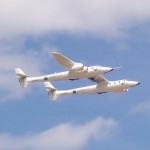
Day One saw the arrival of the Virgin Galactic spaceship carrier, White Knight Two (aka “Eve”). To refresh your memory, this is the carrier, the mothership craft which will take the spaceship a few miles aloft. At this point, the spaceship will be released, and then it will use rockets to take passengers to the edge of space.

On Monday, however, we had rain. Heavy rain. So, White Knight 2 landed fast and scurried into a hangar immediately.

Consequently, it wasn’t until Tuesday that we really had a chance to see the craft. She started by making a few slow flybys…nice and quiet (almost like a glider)…and then ducked back into the hangar for a couple of hours.

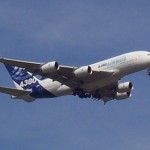
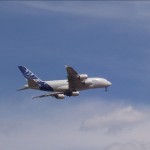
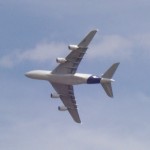
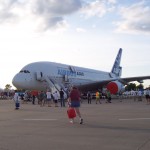
The reason Eve went back to the hangar became clear a few minutes later. I was en route to an exhibit when a dark shape blotted out the sky. Something truly massive, vaguely sinister, a vast orca with wings. Then, a cloud shifted and I realized it was the Airbus A380, the largest passenger plane in the world. This plane is so large, they had to rearrange lighting, strengthen portions of the runway, and clear the center display area to hold it.

The Concorde came to Oshkosh several times. The SuperGuppy, a specially modified plane which carries components for the space program (we’re talking HUGE). The B-2 bomber. The C-5A Galaxy. But the A380 dwarfs them all.

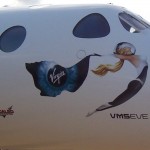
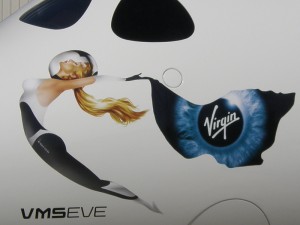
After the A380 was ensconced in the main display area (fun to watch), Eve returned, and I was able to take a few pictures up close, including the terrific graphics and most attractive noseart (see below). I also have a t-shirt with the same graphics. I’m such a geek!

Eve Nose Art

Eve Nose Art

In case you’re wondering, the classy woman is Sir Richard Branson’s mother, Evette. The image is both an homage to her and the pinup-inspired artwork made famous on WWII aircraft. Branson is clearly an aviation fan…he once apologized to me when he accidently walked into a photo I was taking of the first White Knight back in 2005.

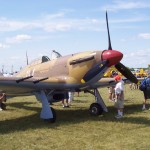
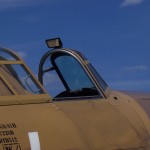
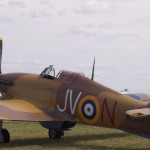
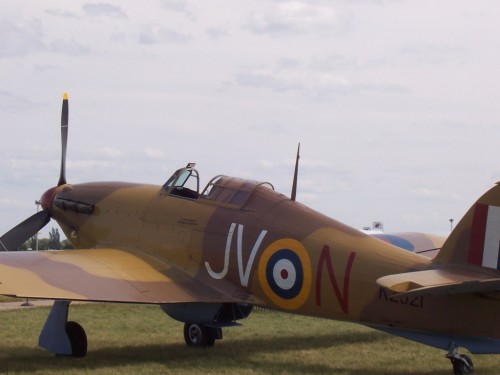
Along with ogling nose art and whale watching, I saw a few other aircraft including a Hawker Hurricane IV (Hurricanes and Spitfires stopped the Germans during the Battle of Britain nearly 70 years ago…seems like yesterday). This was a beautifully-restored example down here from Canada, complete with the rear-view mirror for the pilot, handy for merging into traffic, and with grease fittings on the aileron hinges.

Hawker Hurricane IV

Hawker Hurricane IV

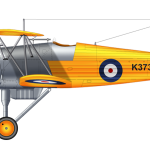
Unlike the Spitfire, which was a new design with some influences from Supermarine’s racing floatplanes, the Hawker plane owed much to it’s biplane ancestors. The design was essentially a re-engined, monoplane version of the Hawker Fury and Hawker Hart biplanes.

Hawker Fury Biplane

Hawker Fury Biplane


Unlike the all-metal construction of the Spitfire, the Hurricane used construction techniques already considered obsolete by the start of the war, with fabric-covered wings and fuselage (later models had metal-skinned wings), and minimal use of welding. Ironically, these same features contributed to the Hurricane’s longevity, because crews found the planes easily repaired and maintained. The type served throughout the war, and with various air forces for many years afterwards.

In the evening, we went down to the Ultralight area (a couple of miles down the line…the entire flight line is some 5 miles long, with double rows of airplanes every 80 feet). It was pretty breezy, but some of the planes were aloft, including the Snedden M7. The Snedden M7 uses a single stick to control ailerons and the inverted V-tail (which itself combines the rudder and elevators). Interesting airplane, although getting into the cockpit requires crawling underneath and then popping up into the seat. Hmm…

We also saw the the Yuneec electric-powered ultralight. I’ll be interviewing them on Friday.

Oh, after all of the rain on Monday, we had dust everywhere today.

Day One, Part II

Wednesday, July 29th, 2009

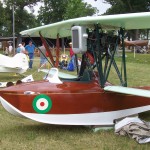
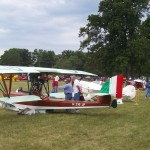
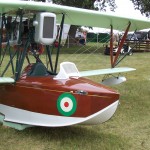
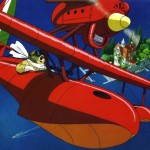
We have more than just one WWI replica here. Over in the Vintage aircraft section, a member brought their replica of a Macchi M.5 flying boat. This was a single-seat aircraft used by the Italians in the WWI, but universally, everyone who saw it immediately exclaimed, “Porco Rosso!” I guess there’s a lot of Hayao Miyazaki fans out there!

100_0748100_0743100_0746

After wandering for a bit, I did my first interview of the year with Bill Steele of VirtualHUD. A Heads-Up Display, or HUD, lets you track information like speed, altitude, attitude, direction, engine vitals, and more, without having to look down at an instrument panel. Instead, it’s displayed on a transparent screen.

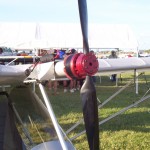
Except this is an innovative system for displaying your instrument panel on the back of your propeller!

Regular monitors and television screens fire a stream of electrons at the phosphors on the back of your screen, causing them to glow one line at a time, building up a picture in the process. VirtualHUD shoots a laser beam (well, four laser beams, red, green, blue, and an infrared beam, creating a full color display) at the back of the rotating propeller…which reminded me of those early attempts to fire through that same propeller disc!

Drawing an image on a rotating propeller turns out to be a very difficult task. First, there’s the difference in rotational speed from the tip…which is traveling at nearly supersonic speeds…to the hub. After the interview, I mentioned that Edison encountered the same problem, albeit at a much slower speed, with the phonograph. His solution was to use cylinders instead of discs.

Additionally, propeller speed changes almost constantly, and on propellers with variable pitch, the angle of the blades changes as well. And that’s just with two-bladed propellers — more blades, more variables to consider.

Mr. Steele went through a number of prototypes before realizing he could use a single rotating mirror to achieve this effect. This worked, but it was still too slow; inertia was a problem. So, he shrunk the whole assembly down to less than a millimetre in width (something I find analogous to Harrison’s solution to devising a timepiece to win the British Admiralty prize for solving the longitude problem).

The final unit is light and portable, not much larger than a pocketbook. It can be used with any airplane with a propeller in front of the pilot (even that 172 you rent on the weekend). Very, very cool.

Bill Steele, Inventor of VirtualHUD

Bill Steele, Inventor of VirtualHUD

Mr. Steele (at left) works at Microsoft, so between his VirtualHUD and his computer background, we went full-on geek for a solid hour. Zack will have fun trying to figure this one out, although it’s probably more comprehensible than the interview I did with the propulsion guy from NASA (damn, that was so much fun!).

After the interview, we discovered it was raining. A nice warm summer rain. Then, someone turned on the faucets and it started coming down like a horse pis…uh, in buckets. The afternoon airshow was canceled, and the concert…by the Doobie Brothers (“suddenly, it’s 1978!”) was two hours late. We opted to be “Don’t Bes” and passed on the concert. I like rain, so I went out and wandered among aircraft until I was thoroughly soaked.

That wasn’t a problem. It was the chill wind which blew the storm clouds out and turned my lips and fingernails blue that was.

Here’s a gallery with some more pictures. I’ll post about Day Two, including the A380 arrival and seeing White Knight Two fly tomorrow (and maybe even with some video!

Day One, Part II: In the Land of Airplanes…

Tuesday, July 28th, 2009

After the presentation on the electric aircraft, I headed out to see a bunch of the show (solo, this time).

100_0683100_0682100_0687

100_0701100_0694100_0700

I wanted to try give some small sense of the sheer immensity of this show. These pictures show a tiny fraction of some of the acres of vendors here selling airplanes, airplane-related gadgets, memorabilia, books, antiques, and souvenirs. Additionally, you can see a few acres of aircraft…a forest of tails and propellers as far as you can see, and one of couple of dozen technical sessions (that’s probably a couple hundred folks there)!

Now, three WWI airplane replicas with special connections:

100_0699100_0697100_0696

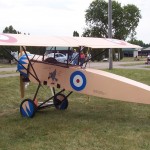
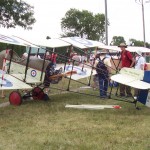
These are 3/4-scale WWI aircraft replicas. Even at 75% of the size of the original aircraft, these still can carry a pilot without a problem…just don’t expect to get where you’re going very fast! The advantage, of course, is a chance to play out all of those WWI fighter pilot fantasies.

On the left is a Morane Saulnier Type L replica, flown by Sharon Stark and built by her and her husband. I interviewed Sharon and her husband a couple of years ago. The middle aircraft is a De Havilland DH2, a pusher aircraft (having the engine and propeller behind the pilot), and then a Fokker D-VII replica.

The Morane Saulnier and the DH2 both represent different approaches to a nagging issue for early WWI fighters: how to fire a gun at the other guy. The logical approach is stick a gun right in front of you and aim your plane at them. However, it turns out that propellers and bullets don’t mix too well.

Early aviators tried a number of solutions. Most involved sticking a gun on top of the wing. Now, this was really awkward when you had to load ammunition. Imagine it: flying along at 90-100 mph, you have to unbuckle your seatbeat, stand up (!), and remove a heavy drum from the top of the gun (don’t drop anything!). Meanwhile, you still have to fly the plane, so you tuck the stick between your knees. Of course, if you need to reload your gun, it’s because you’re in a dogfight…so you’re trying to do this while some equally harassed guy is trying to shoot at you. Yeah, someone in the upper ranks really gave this one a lot of thought.

Someone else said, “Hey, let’s put the engine in the back, and the pilot will have great view forward.” Probably the best plane to follow this philosophy was the DH2 (that middle airplane, the ancestor of the De Havilland Mosquito I joked about the first evening). There were two problems with this, however. First, there was that forest of struts and wires needed to support the tail assembly. This slowed the plane down, and it was also fragile enough that it wasn’t really suited for dogfighting…one wire snaps, and everything collapses.

Then, you had that heavy engine behind you…one bad landing, and the pilot found themselves between a rock and a hard place…a rock weighing several hundred pounds and spewing gasoline all over the highly flammable nitrate dope used to seal the aircraft’s fabric covering!

It was up to the pilots on the Front Line to figure out some other options. One Russian pilot took a grapple and a length of rope up with him. When he spied a German pilot, he dropped the grapple over the side right onto the plane. Ouch. It worked…once. Another pilot managed to bring down an enemy plane simply by “flying aggressively” (the prisoner said, “That guy is crazy, I thought he was going to hit me!”).

Then, a French pilot, a former racer named Roland Garros, came up with the sort of brilliant idea of making his gun so it would fire through the propeller by bolting big angled metal plates to his propeller…the propeller of his Morane Saulnier Model L! The angle deflected the bullets to the side so they didn’t bounce back. This worked surprising well, at least as long as you weren’t standing over there on the left when Garros tested this arrangement on the ground (it was only a flesh wound).

Garros proved unstoppable for about a week. Then, one of the plates came loose and he shot his propeller into bits. When he landed, German authorities took the plane to aircraft designer and manufacturer Anthony Fokker and said, “Build us more like this.” Fokker looked at it and thought it was quite possibly the stupidest arrangement he had seen. Working with another engineer, they created a simple geared arrangement which only fired the machine guns when the propeller blade wasn’t in the way.

The Fokker planes ruled the skies for a few weeks, then everyone else figured it out. But Fokker continued to design some of the best planes of the war on either side. The D-VII (the plane on the right) was considered such a threat that this is the only type of aircraft specifically mentioned in the Treaty of Versailles.

Some other planes at random:

100_0717100_0714100_0716

Some Pietenpols, a two-seat, high-wing (“parasol”) design originally from the 1930s utilizing a Model A four-cylinder flathead Ford engine, but adapted to all sorts of engines since then. This is a popular aircraft…the one with the round engine (a Rotec radial) was finished last year, and the yellow plane is new to the show this year. There’s at least 20 of these planes here this year!

100_0729100_0732100_0731

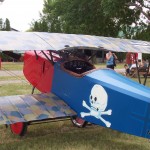
Some of the hundreds of biplanes here at the show. The piratical craft is one of the performers in the airshow.

I’m stopping here for a bit…I have to go do another interview. I’m going to see if I can set up some sort of gallery for more pictures later today. I also realized the thumbnails are linking to HUGE files, so I’ll resize these to something smaller.

Still to come from Day One: more about shooting things at propellers (it’s very cool), a Miyazaki favorite makes an appearance, and rain makes us Don’tbies…whew, this is a fair amount of work!

Day One, Morning…

Tuesday, July 28th, 2009

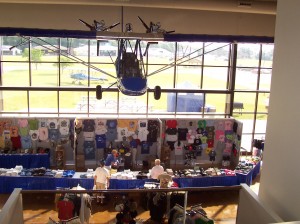
100_0681Crawled out of bed this morning, and we proceeded in the Museum to meet up with Zach (this is a view from the top of the stairs looking at the original AirCam and the t-shirt sales!). I’m not a morning person by any stretch of the imagination (my systems don’t really come online until mid-afternoon), but somehow, I’m able to get my rear in gear when there’s planes involved.

Even when I worked at an airport in college, I started work at 5:30 in the morning…never a problem! This meant I got up at 3:45 and hit the road by 4:30 am. I would cruise along deserted roads at 95-100 mph, listening to Art Bell interview UFO abductees or Dr. Hoagland talking about finding faces on Mars (ah, middle of the night AM talk radio), just so I could walk around the hangars checking the Hobbs meters and then pull the planes onto the tarmac.

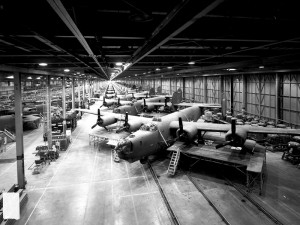
Willow_Run_FactoryThere were several volunteers at the tent (and Zach’s intern, a girl totally bored by aircraft), and no interviews yet. I listened to one of the Warbird’s…Warbirds are the former military aircraft brought to Oshkosh by private collectors…people talk about the difficulties of doing restoration work. Not on his aircraft, but his tug, a vehicle which tows airplanes around on the ground. He’s restoring a Ford-Ferguson tug used at the famous Willow Run factory. This was a factory created by Henry Ford to build aircraft on an assembly line much as he made cars. Raw materials entered the massive Willow Run facility on one end, and four-engined B-24 Liberator bombers rolled off on the other end.

It was interesting hearing him talk about some of the little historical details which had turned up. For example, the tugs had toolboxes with sloped lids. It turned out that this was specific to tugs used at this plant. Someone noticed that people set tools down on the flat lids, and then drove off and lost them. Solution: angle the lid so they couldn’t set tools down without them falling off!

We tried to get him to do an interview…the guy has P-51 Mustang and a jillion hours flying all sorts of aircraft (not sure what he does, but he clearly has some serious coinage in the bank).

At around 10:30, I left to go to a technical session on a new electric-powered aircraft from China.

The Yuneec (Unique) E430 a product of a factory in Shanghai, with a little technical assistance on the fuselage and wings from a manufacturer of competitive soaring gliders in Germany. In just the past few months, they’ve created a two-seat motorglider…an aircraft which uses power to take off and at certain times during flight, but operates as a glider during the rest of the flight. With good conditions, you could stay aloft all day, but practically, flights are about 2-3 hours tops (which is pretty decent!). This is just a prototype, but they are working to certify this plane in Europe, and possibly offer it here in the US as an experimental aircraft.

The plane would be the first-ever commercially-produced electric aircraft. And, at $89,000, relatively affordable. Wingspan is 45′, so you might want to get a big garage…but the plane only weighs 392 pounds without batteries. The batteries add only about 170 pounds more. They’re a lithium polymer compound with high energy density, and a recharge time of only three hours! Very cool. They’re planning on offering the powerplant to people in the US who want to design their own aircraft around it.

Hmm…I’ve got about 15 designs in mind already! More to come shortly…

First Evening Among Planes…

Monday, July 27th, 2009

Well, it’s about midnight here. Absolutely exhausted, and I’m having a technical issue which will delay my first set of pictures from the show (I need to get something to let my computer and my camera grok with each other).

WhiteKnightTwo_and_SpaceShipTwo_on_Virgin_Galactiv_flight
Rolled into Oshkosh at about 6:30 this evening. It was incredible; this year, the grounds were absolutely packed before opening day. Tomorrow, Burt Rutan and Richard Branson are flying in White Knight Two, which will carry Spaceship Two to altitude for it’s suborbital flight (see above). They are supposed to arrive around 3:00 in the afternoon, and I think people are extremely eager to see this massive plane arrive.

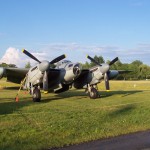
100_0661We met up with Zach Baughmann who runs the EAA Timeless Voices project. Been volunteering with Timeless Voices for several years now, collecting oral histories of people connected with aviation. We walked around the museum building to meet up with Zach. I saw the De Havilland Mosquito (at left, an all-wood, twin-engined fighter flown by the RAF in WWII; click to see a larger image) had been moved from the museum hangar to the yard. I promptly made a bad joke about the size of mosquitoes in the area to someone milling around the airplane. He quickly fled in terror.

I guess it was a pretty bad pun!

100_0663
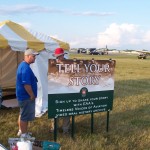
We piled into a golf to help Zach pull together some last minute preparations for opening day tomorrow (Zach got the Mosquito joke), and then whizzed over to the Warbirds area where the Timeless Voices sign up tent is.

100_0664Stooges Do Signage (at left). Yep, four of us managed to pound four fence posts and hang a sign. Then, we grabbed some laminated signs and toured the grounds affixing them to plywood pylons used for signage. This meant we had to cover the entire main grounds at sunset…fantastic!

100_0666
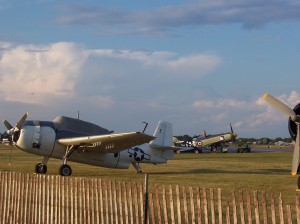
We have nice scenery behind the Timeless Voices tent; here’s a Grumman TBM Avenger (remember, this plane is close to 70 years old!).
100_0667100_0668

The familiar arch at the main entry has been replaced this year with these two sculptures of engines on pylons. It’s attractive, but I’m not sure if this really has the same effect as the big archway.

Because of some changes in traffic patterns and increased attendance, the abundance of golf carts and little runabouts has become a bit of a problem in the past few years. This year, EAA decided to radically limit the paths they can travel. We have two carts which we use during the course of the convention for transporting our interviewees (which include a number of WWII veterans). I can see where this might cause some issues for some of our visitors, but we’ll manage.

I’m just glad I’ve been training (walking, working out, stretching) daily for the past couple of months…there’s a lot of walking involved! Last year was my first time with the cane, and I hadn’t started physical therapy, so it was a bit uncomfortable. I think it’ll be much better this year.

Overall, EAA has reworked the configuration of the grounds. There’s even more exhibitors than usual, a massive increase in benches (and this year, even some flush toilets!), and just a better traffic flow in general. Remember, this show attracts several thousand aircraft, from fragile vintage planes from before WWI (e.g., Mikael Carlson’s Bleriot XI), to private, commercial, racing, military, and business aircraft from every decade thereafter. There’s ultralight aircraft puttering around at 40 or 50 mph, and jets capable of supersonic flight…and everything in between.

100_0670We saw quite a few planes on our drive around the grounds, including a beautifully restored Pitcairn Autogyro from the 1930s. This particular craft was purchased new in the mid-1930s by woman who flew for almost 10 years before she died of cancer at 58. For those of you unfamiliar with autogyros, this is not a helicopter. The engine doesn’t turn the rotor blades on top; the propeller in the front pulls the craft through the air, and the rotor blade rotate freely. It’s a very interesting form of air travel. Unlike a helicopter, if the power goes out, autogyros can’t hover.

100_0675Speaking of autogyros, we saw Larry Neal’s latest version of his roadable autogyro. When Zach and I interviewed Larry a couple of years ago at Sun ‘n’ Fun, Larry talked about fitting his design with tailfins…and sure enough, here it is with fins and 59 Cadillac tail lights for driving on the road! (Those of you who remember my old Cadillac from college know how much I enjoyed see this!), a beautifully polished T-33, and row after row of homebuilt, antique, and classic aircraft.

Video of Larry Neal’s Sky Cycle, capable of both flying and driving! Zach (even more of an autogyro fan than I am) and I interviewed Larry a few years ago at the Florida Sun ‘n’ Fun Airshow. A true visionary and a intuitive engineer. Also, a heck of a great guy.

OK, I’m beat, and I’ve got to be at the museum tomorrow by 8:00 am to catch the start of the library book sale. Since we’re a little short of interviewers this year (Mel, I’m talking about you!), I’m going to be pulling some extra shifts. This is exceedingly interesting, and I’m looking forward to it!

Last minute preparations

Sunday, July 26th, 2009

Well, dog is at the “spa”, I just put the last load of clothes in the washer, and I’m trying to wrap up a client project project. Once this is done, it’s shower, the last of the packing, and hit the road for Oshkosh for AirVenture 2009. No pictures, this is a quick update (but I’m far too garrulous for Twitter!).
I’m not particularly happy with my quick attempt at a blog template, but it’ll do for now. It’s about the pictures (and maybe my rambling writing), right? I didn’t get nearly as much accomplished before the trip as I would’ve liked, but then again, I never do!
I’ve discovered this site called Gigapan, where people upload these fantastic panorama photos taken with a special camera mount. The resulting images are spectacular; not only do you have the wide panorama, but you’re able to zoom in to see incredible detail. Appropriately, here are three images from last year’s AirVenture.

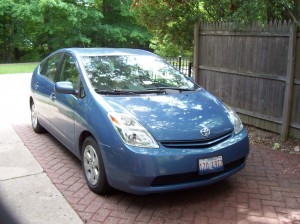
Late edit, now that I have pictures! Here’s the Prius ready to roll up to Oshkosh…

100_0653

OK, that’s it for now. Next update, this evening…